Understanding Vinegar as a Natural Cleaning Agent
Vinegar has been a household cleaning staple for centuries, and modern science continues to validate what our grandparents knew intuitively. The active ingredient—acetic acid—provides antimicrobial, descaling, and degreasing properties that make it one of the most versatile natural cleaning agents available. When you optimize Natürliche Hausmittel zur Reinigung using vinegar performance, you're tapping into a compound with a molecular structure that disrupts bacterial cell walls and dissolves alkaline mineral deposits effectively.
The beauty of vinegar lies in its accessibility and safety profile. Unlike synthetic cleaners loaded with volatile organic compounds, white distilled vinegar breaks down into harmless byproducts while delivering impressive cleaning results on countless household surfaces. However, many homeowners waste this powerful resource by applying it incorrectly or expecting results that require different concentrations and techniques.
The Science Behind Vinegar's Cleaning Power
To truly optimize your natural cleaning approach, understanding the chemistry helps you work smarter rather than harder. Acetic acid (CH₃COOH) creates an acidic environment with a pH between 2.4 and 3.4, which proves effective against approximately 80% of common household bacteria when applied correctly. The acid bonds with mineral deposits like calcium carbonate and magnesium—common culprits in hard water stains, soap scum, and limescale buildup.
Research published in the Journal of Applied Microbiology demonstrates that acetic acid concentrations above 4% show significant antimicrobial activity against pathogens like E. coli and Staphylococcus aureus. This explains why standard household vinegar consistently outperforms many commercial cleaners on kitchen countertops, bathroom surfaces, and glass windows when given adequate contact time.
How Concentration Affects Performance
Not all vinegar cleaning situations demand the same concentration levels. Standard white distilled vinegar contains 5-8% acetic acid, which handles daily maintenance tasks effectively without damaging most surfaces. However, heavy-duty applications like removing severe hard water stains, killing mold spores, or breaking down baked-on grease may require concentrated solutions approaching 20% acetic acid content.
Industrial-strength cleaning vinegars containing 20-30% acetic acid prove effective for professional applications but require careful handling, proper ventilation, and protective gloves. These concentrated solutions dissolve mineral deposits dramatically faster than household varieties but increase corrosion risks on sensitive surfaces like natural stone, aluminum, and certain sealed woods.
Step-by-Step Methods for Optimizing Vinegar Applications
Optimizing your Natürliche Hausmittel zur Reinigung: Essig performance requires matching solution strength, application temperature, and contact time to specific cleaning challenges. The following tutorials provide actionable methods that residential and commercial cleaners alike can implement immediately.
Basic All-Purpose Cleaning Solution
Create a simple all-purpose cleaner combining equal parts white vinegar and warm water for daily household maintenance. This 50/50 solution handles kitchen counters, bathroom sinks, and appliance exteriors effectively while remaining safe on most sealed surfaces. Add five drops of essential oil like lemon or tea tree for improved fragrance and additional antimicrobial properties without compromising cleaning efficiency.
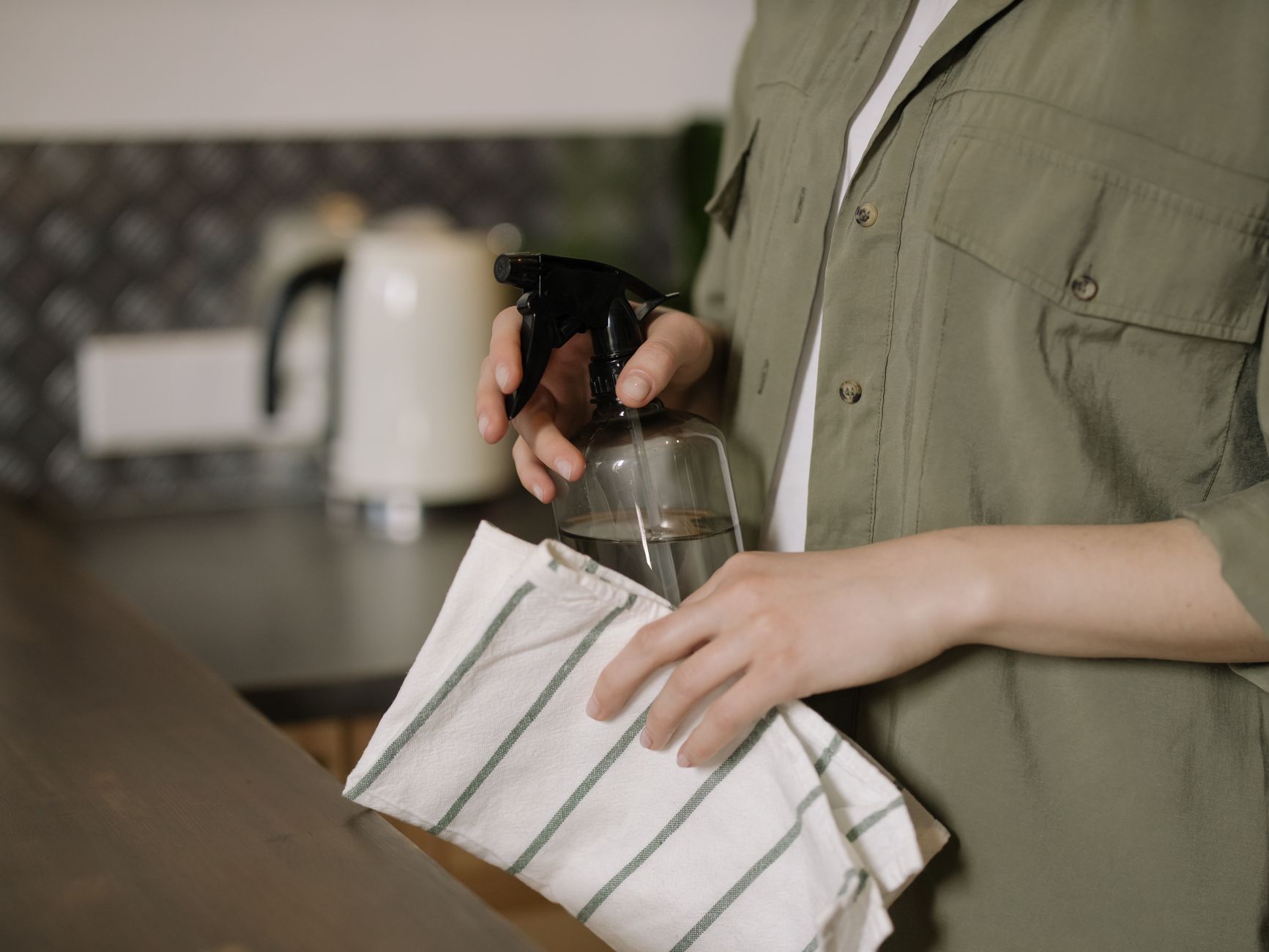
Application technique matters significantly. Spray the solution generously onto surfaces, allowing it to dwell for 3-5 minutes before wiping with a clean microfiber cloth. This contact time ensures the acetic acid properly disrupts bacterial membranes and begins dissolving organic residues. Rush the process and you'll remove surface dirt while leaving behind invisible biofilms that breed bacteria between cleanings.
Deep Descaling for Hard Water and Mineral Deposits
Severe hard water stains, limescale buildup, and mineral deposits require concentrated vinegar solutions and extended contact times. Combine one part white vinegar with one part warm water for moderate deposits, or use full-strength 5% vinegar for heavy accumulation on showerheads, faucet aerators, and kettle interiors. For stubborn deposits approaching two years of accumulation, consider 20% acetic acid solutions applied with appropriate safety precautions.
Soaking removable fixtures like showerheads and faucet aerators proves dramatically more effective than surface application alone. Place these components in a container filled with warm vinegar solution, allowing them to soak for 30-60 minutes before scrubbing with a soft brush. The warm temperature increases acetic acid penetration into mineral matrices, dissolving calcium and magnesium compounds significantly faster than room-temperature applications.
Grease and Oven Cleaning Optimization
Baked-on grease, food residue, and oven grime demand specialized vinegar techniques combined with mechanical action. Create a thick paste using baking soda and vinegar for stubborn stains, applying it to affected surfaces and allowing it to sit for 15-20 minutes before scrubbing. The chemical reaction between sodium bicarbonate and acetic acid creates carbon dioxide bubbles that help lift particulate matter from porous surfaces.
For oven cleaning specifically, spray full-strength white vinegar onto interior surfaces after the oven has cooled completely. Allow the vinegar to work for 20-30 minutes, breaking down carbonized food residues and grease films before wiping with a damp cloth. This method eliminates harsh chemical fumes while delivering results comparable to commercial oven cleaners containing caustic sod啊
Comparing Vinegar Performance Across Cleaning Applications
Different household surfaces respond variably to vinegar cleaning solutions. The comparison table below summarizes optimal approaches for common household cleaning scenarios based on tested concentration levels, contact times, and surface compatibility.
| Cleaning Application | Recommended Vinegar Strength | Contact Time | Surface Compatibility | Additional Tips |
|---|---|---|---|---|
| Kitchen Countertops | 5% (standard) | 3-5 minutes | Safe on sealed stone, laminate, tile | Avoid prolonged contact with unsealed marble |
| Bathroom Descaling | 5-10% (standard to slightly concentrated) | 10-15 minutes | Safe on porcelain, acrylic, fiberglass | Warm solution increases effectiveness 40% |
| Window Cleaning | 5% diluted 1:1 with water | 2-3 minutes | Safe on glass, frames, sills | Add 1 tbsp rubbing alcohol for streak-free finish |
| Oven Interior | 5% full strength | 20-30 minutes | Safe on enamel, stainless steel | Paste method for baked-on grease |
| Hard Water Stains | 10-20% (concentrated) | 30-60 minutes soaking | Safe on porcelain, metal fixtures | Soak removable parts for best results |
| Floor Cleaning | 5% diluted 1:4 with water | Immediate | Safe on sealed hardwood, tile, vinyl | Rinse with water after application |
| Microwave Interior | 5% with lemon slices | 5 minutes steaming | Safe on all interior surfaces | Citric acid enhances deodorizing properties |
| Carpet Stain Treatment | 5% diluted 1:2 | 10 minutes blotting | Spot test first on delicate fabrics | Blot, never rub, to avoid fiber damage |
Safety Considerations and Surface Compatibility
While optimizing Natürliche Hausmittel zur Reinigung using vinegar performance offers numerous advantages, certain safety precautions prevent damage and ensure effective cleaning. Vinegar's acidity proves destructive to natural stone surfaces like granite, marble, and travertine when left in contact for extended periods. The acid etches these materials permanently, creating dull spots that compromise both appearance and resale value.
Similarly, vinegar damages aluminum, cast iron, and waxed wood surfaces through oxidation and degradation of protective coatings. Always test cleaning solutions on inconspicuous areas before full application, especially on vintage or antique pieces with unknown surface treatments. The potential for irreversible damage far outweighs any cleaning convenience vinegar might provide on sensitive materials.
What Not to Mix with Vinegar
Never combine vinegar with bleach, hydrogen peroxide, or ammonia-based cleaners. Mixing vinegar with bleach creates toxic chlorine gas that causes respiratory distress and potentially fatal pulmonary edema. Combining vinegar with hydrogen peroxide in the same container produces peracetic acid—a corrosive compound that irritates skin, eyes, and respiratory tissues. While some sources promote alternating these substances for enhanced cleaning, keeping them physically separated prevents dangerous chemical reactions.
Maximizing Efficiency Through Temperature and Technique
Temperature manipulation significantly impacts vinegar's cleaning efficiency. Warm vinegar solutions (approximately 120-140°F or 49-60°C) increase acetic acid molecular movement and penetration rates by 30-40% compared to room-temperature applications. This temperature range proves optimal for dissolving grease, breaking down protein-based stains, and accelerating mineral deposit removal without creating excessive fumes or surface damage.
Application technique equally important. Microfiber cloths prove dramatically more effective than cotton rags or paper towels for vinegar cleaning applications. The electrostatic properties of microfiber attract and retain particulate matter while the fine fibers create capillary action that draws cleaning solutions into microscopic surface irregularities. Always use clean, dedicated microfiber towels for vinegar applications to prevent cross-contamination between cleaning tasks.
Environmental and Health Benefits of Optimized Vinegar Cleaning
Choosing to optimize Natürliche Hausmittel zur Reinigung: Essig performance delivers substantial environmental and health advantages beyond immediate cleaning results. Vinegar-based cleaning solutions eliminate volatile organic compound emissions that contribute to indoor air pollution and respiratory irritation. Families with children, elderly members, or pets benefit significantly from reduced chemical exposure while maintaining equivalent cleanliness standards.
The environmental impact extends beyond indoor air quality. Vinegar production generates minimal wastewater compared to synthetic cleaner manufacturing, and biodegradable acetic acid breaks down rapidly in municipal treatment systems without accumulating in waterways. Choosing concentrated vinegar solutions that require dilution further reduces packaging waste and transportation emissions associated with pre-mixed commercial products.