Why Vinegar Should Be the Foundation of Your Natural Cleaning Routine
Let us be clear about something most cleaning guides overlook: white distilled vinegar is not merely a budget-friendly substitute for commercial cleaners. It is a scientifically sound, broadly effective cleaning agent that deserves a central place in any natural home care system. The active compound—acetic acid, typically at a concentration of five percent in household vinegar—breaks down mineral deposits, cuts through grease, neutralizes alkaline stains, and inhibits the growth of many common household bacteria and molds.
What makes vinegar genuinely exceptional, however, is not just what it can clean but how cleanly it operates. Unlike synthetic cleaners that leave behind volatile organic compounds, residual chemicals on surfaces, or toxic fumes, vinegar rinses away with water, leaves no hazardous residue, and biodegrades instantly. This is the critical distinction between cleaning that merely looks superficially clean and cleaning that actually improves the health quality of your living environment.
Consider the typical American household. The average home contains over eighty different cleaning products, each carrying its own set of potentially harmful ingredients. According to research published in environmental health journals, regular exposure to synthetic cleaning agents has been linked to respiratory irritation, skin sensitization, and hormonal disruption. Vinegar eliminates nearly all of these risks while delivering comparable—or in many cases superior—cleaning results at a fraction of the cost.
A single gallon of white distilled vinegar costs less than two dollars. That same gallon can replace approximately fifteen to twenty different specialized cleaners when used correctly. Over the course of a year, that translates to savings exceeding one hundred fifty dollars while dramatically reducing your household's chemical footprint. This is not theoretical advice; this is practical economics combined with genuine cleaning efficacy.
The Science Behind Vinegar's Cleaning Power
Understanding why vinegar works transforms you from someone who follows instructions into someone who understands their tools. Acetic acid, the active ingredient in vinegar, functions as a weak acid with a pH value around 2.4 to 3.4. This acidity is the key to its cleaning versatility. Most household soils and deposits are alkaline in nature—hard water minerals like calcium carbonate, soap scum, and biological residues all carry alkaline properties. When acid meets alkaline deposit, a neutralization reaction occurs that breaks the bond holding the soil to the surface, allowing it to be wiped away effortlessly.
Vinegar's disinfecting properties, while sometimes overstated by marketing hype, are genuinely effective against a broad spectrum of common household pathogens. Studies have demonstrated that vinegar solutions can eliminate approximately ninety percent of bacteria including Salmonella and E. coli, as well as various fungi and mold species, when left in contact with the affected surface for sufficient time. The mechanism involves disrupting cell membranes and denaturing essential proteins within microorganisms, effectively shutting down their ability to reproduce and function.
For hard water removal specifically, vinegar represents one of the most reliable natural solutions available. Calcium and magnesium ions that cause limescale bonding to fixtures, shower doors, and kettles are soluble in acidic environments. Soaking or spraying a vinegar solution on mineral deposits initiates a chemical dissolution process that gradually breaks down the crusty buildup without the need for abrasive scrubbing or corrosive commercial descalers containing hydrochloric acid.
It is important, however, to acknowledge what vinegar cannot do. It is not a registered disinfectant in the regulatory sense and should not be relied upon for sanitizing surfaces in food preparation areas when cross-contamination with pathogens like listeria is a serious concern. It will not remove heavy mold infestations from porous materials. And critically, it should never be mixed with bleach, hydrogen peroxide, or ammonia, as these combinations produce toxic chlorine gas, hydrogen peroxide decomposition hazards, or toxic chloramine fumes respectively. This single safety rule warrants repeating: vinegar and bleach must never encounter each other during any cleaning process.
Building Your Vinegar Cleaning Arsenal: Essential Recipes and Solutions
Before establishing your daily workflow, you need the right solutions prepared and accessible. Having purpose-formulated vinegar mixes ready to use eliminates friction and makes consistent cleaning genuinely effortless rather than requiring improvisation each time you pick up a spray bottle.
All-Purpose Vinegar Cleaner combines two tablespoons of white vinegar with two cups of warm water in a standard spray bottle. This is your workhorse solution for daily surface cleaning—countertops, appliance exteriors, cabinet fronts, and general wiping tasks. Add five drops of tea tree essential oil for enhanced antimicrobial properties and a pleasant fragrance that masks vinegar's naturally pungent odor without compromising its cleaning ability.
Heavy-Duty Descaling Solution uses undiluted white vinegar in a spray bottle. This full-strength approach targets shower heads, faucet aerators, kettle interiors, and any area with significant mineral buildup. The extended dwell time required—minimum fifteen minutes for heavy deposits—means this solution benefits from being applied during your weekly deep cleaning session rather than your daily routine.
Glass and Mirror Cleaner requires half a cup of white vinegar, two cups of distilled water, and one tablespoon of cornstarch. The cornstarch acts as a mild abrasion reducer that prevents streaking while the vinegar dissolves water spots and fingerprint oils. Shake vigorously before each use to suspend the starch properly. This recipe delivers results that rival expensive commercial glass cleaners without the ammoniacal smell.
Fabric Freshener and Odor Neutralizer mixes equal parts water and vinegar in a spray bottle. Lightly mist upholstered furniture, curtains, and carpet areas to neutralize cooking odors, pet smells, and mustiness. The vinegar scent dissipates completely within fifteen minutes as it evaporates, leaving behind no residual odor while the acetic acid neutralizes alkaline-smelling compounds in the air and fabric fibers.
Floor Cleaning Solution calls for one-quarter cup of white vinegar added to one gallon of warm water. This solution is safe for sealed hardwood floors, tile, vinyl, and laminate surfaces. The vinegar cuts through tracked-in dirt and foot traffic residue without leaving the filmy buildup that many commercial floor cleaners deposit over time. Avoid using vinegar on unsealed stone floors such as marble or granite, as the acid will etch the surface permanently.
The Daily Vinegar Cleaning Workflow: A Step-by-Step System
An effective daily cleaning routine does not require hours of labor. The key insight is that consistency beats intensity. Spending fifteen focused minutes each day on targeted vinegar-based cleaning prevents the accumulation that makes weekend deep cleaning sessions feel overwhelming and exhausting. Here is a systematic approach that takes advantage of vinegar's quick-acting properties while minimizing total effort.
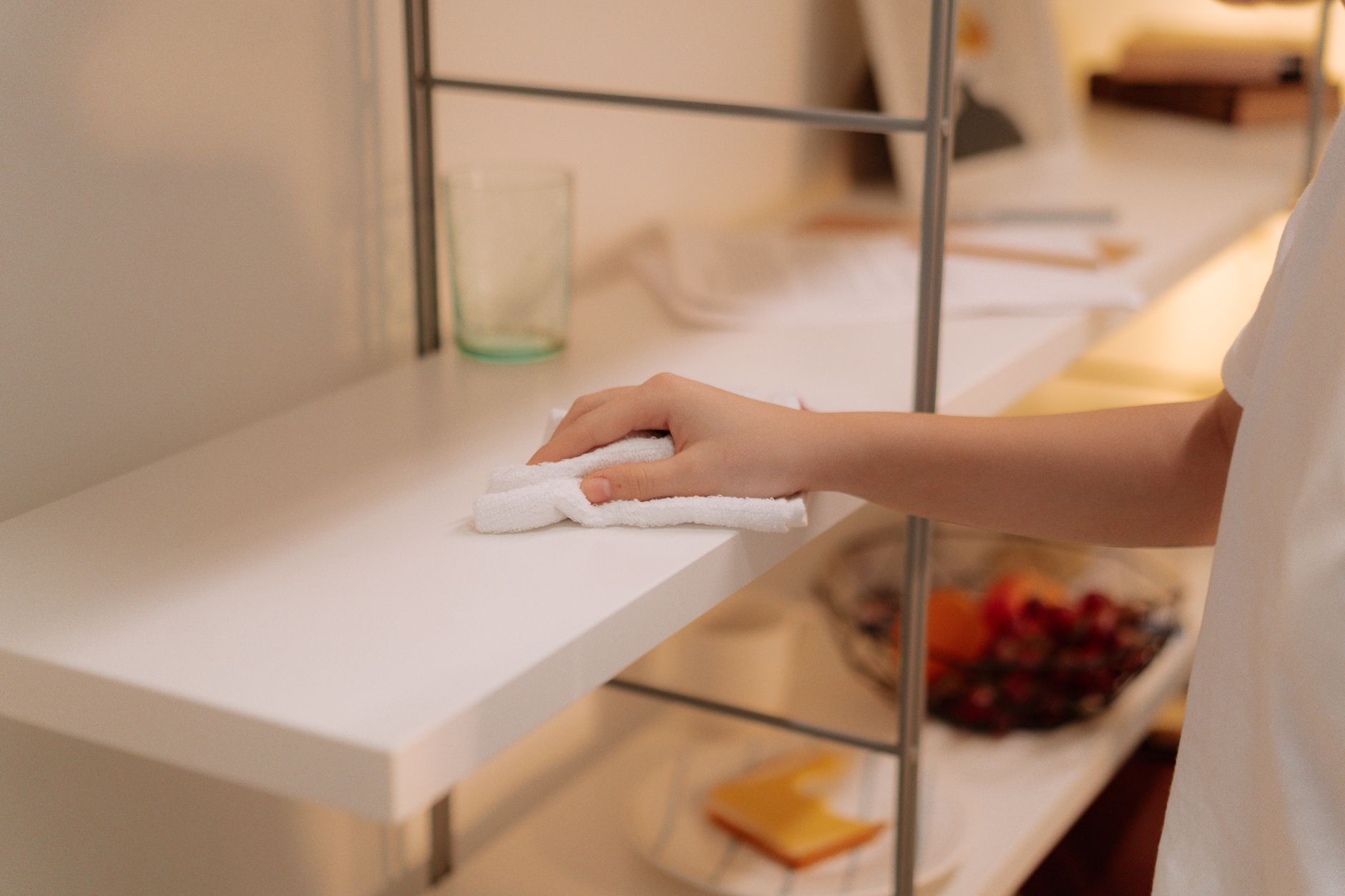
Morning Reset—Ten Minutes. Begin each day with a quick kitchen and bathroom sweep. Spray your all-purpose vinegar cleaner on the kitchen countertop and wipe with a microfiber cloth. Clean the exterior of your coffee maker, toaster, and microwave—spraying vinegar inside the microwave and letting it sit for two minutes before wiping loosens splatter far more effectively than scrubbing. In the bathroom, spray the vinegar solution on the sink, counter, and faucet. The acetic acid immediately begins breaking down toothpaste splashes and hard water rings. Wipe the mirror with your glass cleaning solution for a streak-free finish. Finally, quickly spray and wipe the toilet exterior and seat, finishing with a brief interior application if needed.
Afternoon Touch-Up—Five Minutes. Return home from work and address the highest-traffic surfaces. Spray vinegar solution on entryway tables, light switches, door handles, and remote controls. These high-touch points accumulate oils, bacteria, and grime throughout the day. A quick vinegar wipe sanitizes and refreshes simultaneously. Address any visible spills or splashes on dining surfaces using the same all-purpose solution. A damp microfiber cloth with a light vinegar spray removes fingerprints from appliances and glass tabletops instantly.
Evening Wind-Down—Five Minutes. Before ending your day, perform a final kitchen and bathroom pass. Wipe down all kitchen surfaces one last time, ensuring no food residue remains overnight. Rinse your cleaning cloths in a bucket of warm water with a splash of vinegar to sanitize them between uses. Empty and wipe the trash can interior with a vinegar-dampened cloth to prevent lingering odors. Check that your vinegar spray bottles are filled and ready for the next day. This brief closing routine ensures you always start the following morning with clean surfaces rather than yesterday's accumulated mess.
The total daily commitment is twenty minutes maximum, and most days require closer to twelve minutes once the workflow becomes habitual. The psychological benefit of coming home to consistently clean surfaces cannot be overstated—it creates an environment that reinforces further care and maintenance naturally.
Weekly Deep Cleaning Protocol with Vinegar Solutions
While the daily workflow maintains baseline cleanliness, a weekly deep cleaning session addresses areas that accumulate grime beyond what daily attention can manage. This fifteen-to-twenty-minute session complements your daily routine without replacing it.
Start with the bathrooms. Spray undiluted vinegar directly onto shower doors, tile grout lines, and the bathtub surface. Allow the vinegar to dwell for at least fifteen minutes while you move to the next task. For the toilet, pour half a cup of vinegar into the bowl, let it sit, then scrub and flush. The extended contact time allows the acid to dissolve mineral deposits and bacteria that daily wiping cannot fully remove.
Move to the kitchen. Apply your heavy-duty descaling solution to the faucet and surrounding backsplash area. Allow it to work while you tackle the stove surface, wiping away baked-on residue with vinegar-soaked paper towels. Clean the refrigerator exterior and handle with your all-purpose cleaner. For the sink, sprinkle baking soda across the surface, then spray vinegar on top. The resulting fizzing action provides mild agitation that lifts stubborn stains from stainless steel and porcelain sinks. Rinse thoroughly with warm water.
Address windows and mirrors throughout the home. Your vinegar-cornstarch glass cleaner applied with a lint-free microfiber cloth produces results that commercial products struggle to match. Work in a zigzag pattern rather than circular motions to avoid visible streak marks.
Clean baseboards and door frames using a microfiber cloth dampened with your all-purpose vinegar solution. These horizontal and vertical surfaces accumulate dust, shoe scuffs, and airborne grease that daily routines miss entirely. A single pass with vinegar solution restores their appearance without producing fumes that require ventilation.
Essential Tools and Supplies for Your Vinegar Cleaning System
Having the right tools amplifies vinegar's effectiveness dramatically. The wrong application method can undermine even the best cleaning solution, while proper tools make natural cleaning faster and more thorough than conventional approaches.
Microfiber cloths represent the single most important investment. Their split-fiber construction traps dirt, dust, and bacteria mechanically rather than simply pushing them around the surface. A pack of twelve reusable microfiber cloths costs approximately fifteen dollars and lasts for years with proper care—machine washable and dryer-safe. Use color coding to prevent cross-contamination: blue for glass, green for kitchens, red for bathrooms, and yellow for general dusting.
Spray bottles should be purchased in a three-pack minimum, with dedicated bottles for each solution type. Dark amber or blue glass bottles are preferable because they protect vinegar solutions from UV degradation, though clear plastic bottles work adequately for short-term storage. Label each bottle clearly with its contents and dilution ratio to prevent confusion during rapid cleaning sessions.
Natural bristle brushes in three sizes—small detail brush for grout lines and faucet crevices, medium brush for sink basins and tile, and large brush for tubs and shower walls—extend vinegar's cleaning reach into textures that cloths cannot penetrate. Bristle stiffness should vary by surface softness: softer bristles for porcelain and acrylic, medium bristles for tile grout, and stiff bristles for outdoor steps and garage floors.
A dedicated bucket for floor cleaning holds your gallon-sized vinegar floor solution and a wringing mop head. Choose a bucket with a built-in spinner or ridge for efficient wringing. This simple tool completes the kitchen and bathroom floor cleanup that the daily workflow does not address comprehensively.
| Supply | Recommended Quantity | Estimated Cost | Primary Use | Replacement Frequency |
|---|---|---|---|---|
| White distilled vinegar (1-gallon jugs) | 4–6 per year | $8–12 total | All cleaning solutions | Every 6–8 weeks |
| Microfiber cloths (assorted colors) | 12-piece set | $12–18 | Surface wiping and polishing | Every 12–18 months |
| Spray bottles (labeled) | 3-pack minimum | $8–12 | Solution application | When damaged |
| Natural bristle brush set | 3-piece set | $10–15 | Grout, crevices, scrubbing | Every 6–12 months |
| Cleaning bucket with wringer | 1 unit | $15–25 | Floor cleaning | Every 2–3 years |
| Dish brush and scrub pads | Assorted | $8–12 | Sink and appliance detail work | Every 3–6 months |
This initial setup requires an investment of approximately sixty to seventy dollars and eliminates recurring purchases of disposable cleaning products, paper towels, and synthetic cleaning solutions. The return on investment typically materializes within three to four months through eliminated product purchases alone.
Common Mistakes to Avoid When Using Vinegar for Cleaning
Even experienced natural cleaning practitioners make predictable errors that reduce effectiveness or damage surfaces. Understanding these pitfalls protects both your home and your confidence in vinegar-based cleaning.
The most damaging mistake is applying vinegar to natural stone surfaces. Marble, granite, limestone, and travertine are calcium-based materials that react negatively to acid exposure. Even diluted vinegar will etch the polished surface within minutes, creating dull spots that require professional restoration to repair. Always verify your stone type before using any vinegar solution, and when in doubt, use a pH-neutral cleaner specifically formulated for stone surfaces.
Over-concentrating on dilution ratios also undermines results. Using full-strength vinegar on delicate surfaces like sealed wood floors, painted walls, or ceramic tile grout can cause gradual deterioration over repeated applications. The recommended dilution ratios exist for a reason—they balance cleaning power with surface safety. Deviating from these ratios without understanding the consequences risks long-term damage that outweighs any marginal cleaning gain.
Ignoring dwell time represents another frequent error. Vinegar requires contact time to break down deposits effectively. Spraying a solution and immediately wiping it away with a dry cloth provides far less cleaning power than allowing the solution to sit for two to five minutes before agitating and wiping. For hard water stains and soap scum, fifteen to thirty minutes of dwell time makes the difference between effort-intensive scrubbing and effortless wiping.
Finally, storing vinegar solutions in improperly labeled containers creates confusion and potential safety issues. Never store vinegar in containers that previously held food or beverages, as residual contents can contaminate the solution. Always label spray bottles with their contents and date prepared, and discard any solution that develops an unusual odor or cloudiness, indicating microbial contamination from organic debris trapped during preparation.
Measuring Success: How to Evaluate Your Vinegar Cleaning Results
Track your progress through objective indicators rather than subjective impressions. After one week of consistent daily workflow, you should notice that surfaces stay cleaner longer between deep cleaning sessions. After two weeks, the weekly deep clean should feel noticeably easier because accumulated grime has not had time to harden into tenacious deposits. After one month, your home should maintain a baseline cleanliness that requires minimal intervention between dedicated cleaning sessions.
Pay attention to specific performance markers. Faucets that previously required vigorous scrubbing to remove water spots should now respond to a quick vinegar spray and microfiber wipe. Shower glass that developed a permanent cloudy film should regain transparency with weekly descaling treatments. Countertops that felt perpetually sticky despite regular wiping should exhibit a genuine clean sensation when treated with proper vinegar dilution and adequate dwell time.
Cost tracking provides additional validation. Calculate your monthly expenditure on conventional cleaning products before switching to vinegar. Compare this figure to your quarterly vinegar and supply purchase costs. Most households observe a reduction of seventy to eighty percent in cleaning product spending within the first quarter of transition.
Health observations serve as an important but often overlooked metric. Reduced respiratory irritation, fewer skin reactions during cleaning, and improved indoor air quality after cleaning sessions all indicate that you have successfully eliminated harmful chemical exposure from your cleaning routine. These benefits compound over time as your body is no longer subjected to cumulative exposure from synthetic cleaning products.
Maintaining Momentum: Making Vinegar Cleaning a Sustainable Habit
The greatest challenge in any natural cleaning transition is not learning the techniques but sustaining the practice over months and years. Habits persist when they are easy to initiate, rewarding to complete, and visually reinforced by observable results.
Reduce initiation friction by keeping your vinegar spray bottles positioned where they are needed most—one on the kitchen counter, one in the bathroom cabinet, and one near the entryway for quick touch-ups. When tools are visible and accessible, the likelihood of using them increases dramatically compared to storing them in a closet behind other supplies.
Create visual reinforcement by designating a specific microfiber cloth for each cleaning zone. A blue cloth on the kitchen counter and a green cloth in the bathroom create immediate visual cues that signal which task is appropriate and remind you to complete it. This color-coded system also prevents cross-contamination between zones without requiring conscious effort each time.
Schedule your weekly deep clean on a consistent day—Saturday mornings work well for most households because the week's accumulated grime is at its peak, making the cleaning effort visibly worthwhile, and the resulting fresh environment carries through the entire following week. Treat this appointment with the same scheduling priority as a recurring meeting or exercise session.
Celebrate milestones. When your cleaning supply costs drop significantly, acknowledge the financial win. When guests comment on how clean your home is without you revealing your method, recognize that social reinforcement. When you complete a cleaning session without experiencing the headache or throat irritation that previously followed synthetic product use, note the health improvement explicitly. These acknowledgments transform routine maintenance into a rewarding practice rather than an obligatory chore.
The ultimate measure of success is a home that stays clean with minimal daily effort because your systems and habits prevent accumulation from becoming overwhelming. Vinegar, deployed through a consistent daily workflow, provides the chemical foundation for exactly this outcome. The science supports it, the economics validate it, and the daily practice sustains it.